
Systeme.io Review 2026: Can One Free Platform Replace Your Entire Online Business Toolkit?
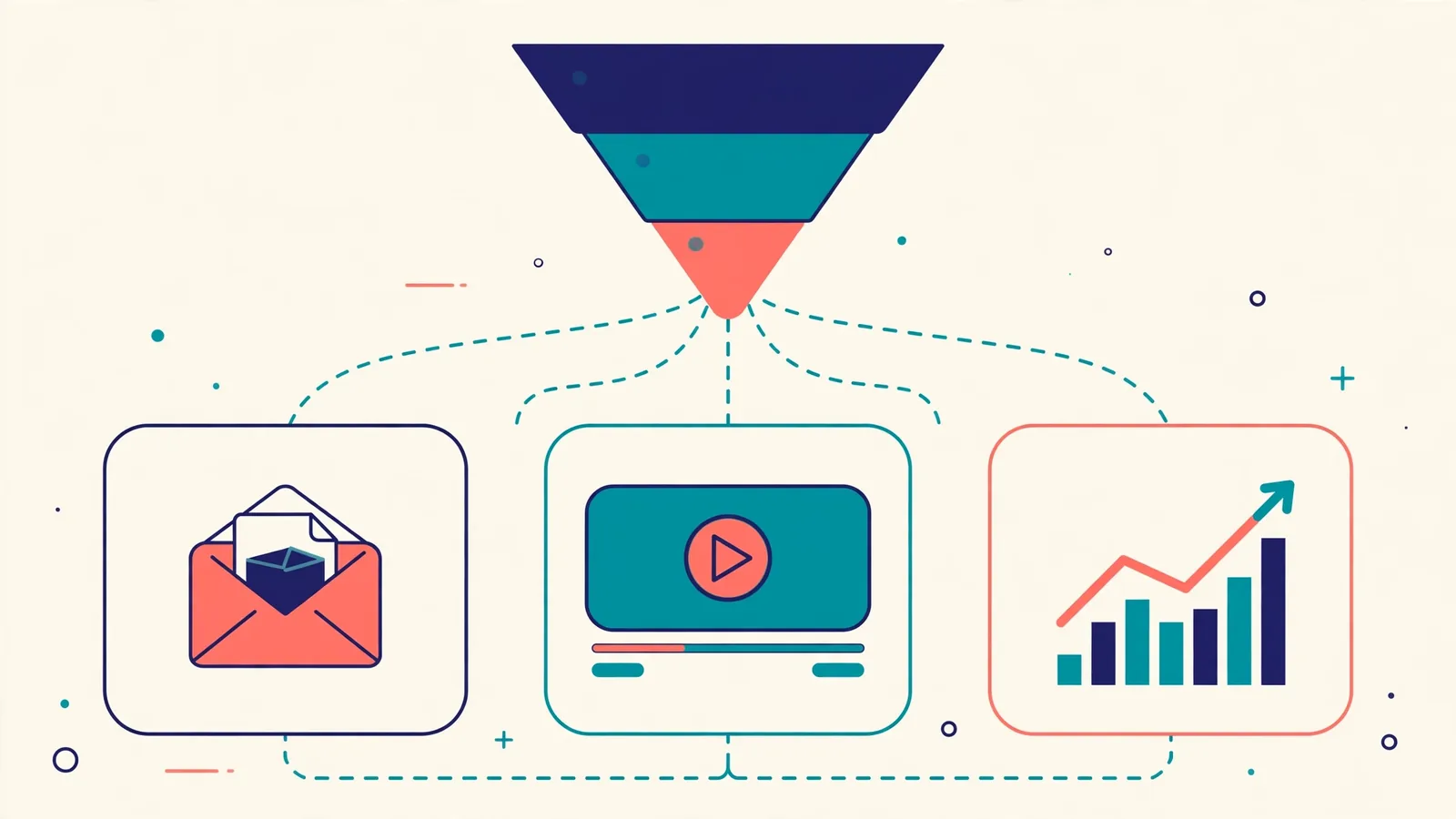

Systeme.io offers a broad free starting point for funnels, email marketing, courses, checkout and automation, but the trade-off is less specialization than using separate best-in-class tools. This review covers plans, limits, total cost and who the platform may suit.
Affiliate Disclosure: This article contains affiliate links. If you register or purchase through our links, BigExclusives may earn a commission at no additional cost to you. This does not influence our editorial assessments. Read our Affiliate Disclosure for details.
If a dedicated online store is your priority, compare platform costs in our Shopify review before choosing an all-in-one toolkit.
If a dedicated store is your priority, read our Shopify vs WooCommerce — when a full store beats an all-in-one comparison before choosing.
Quick Verdict
Best for: creators and small online businesses that want funnels, email marketing, courses, checkout, and automation in one platform instead of several separate subscriptions.
Watch-outs: businesses needing highly specialized design control, advanced CRM workflows, or deep integrations should compare dedicated alternatives and review plan limits carefully.
Bottom line: Systeme.io is most compelling when consolidation and simplicity matter more than having the deepest specialist feature set in every category.
How We Researched This Review
Research basis: Systeme.io’s official pricing, sales-funnel, email-marketing and automation pages were reviewed to verify the plan structure, published limits and core features discussed here.
What we did not do: This article is not presented as a controlled paid-account test, a revenue experiment or evidence that using the platform will produce business results.
Editorial process: Prepared by BigExclusives Editorial under our Review Methodology and Editorial Policy. Pricing and plan limits can change, so readers should confirm the checkout page before subscribing.
The Hidden Cost of Starting an Online Business
Imagine a small entrepreneur preparing to launch her first digital product.
She has a good idea, a useful course, and a growing audience.
But before she can sell anything, she discovers that she needs a website builder, an email marketing platform, a checkout system, a sales funnel, and somewhere to host her course.
Each service seems affordable individually.
Together, the monthly costs quickly become uncomfortable.
And money isn’t the only problem.
She must configure each platform, connect them, troubleshoot integrations, and make sure customer information moves correctly between systems.
What started as a simple business idea becomes a complicated software project.
This is exactly the problem Systeme.io aims to solve.
Rather than requiring several specialized platforms, Systeme.io brings multiple online business tools into a single environment.
The interesting question is whether that convenience comes at the expense of flexibility, performance, or professional features.
Let’s examine what the platform offers, what its plans cost, and who should consider using it in 2026.
What Is Systeme.io?
Systeme.io is an all-in-one digital marketing and online business platform designed for entrepreneurs, creators, educators, and small businesses.
It combines tools for attracting customers, communicating with subscribers, selling products, and delivering digital content.
Its main capabilities include:
- Sales funnel creation
- Landing pages and websites
- Email newsletters and campaigns
- Marketing automation
- Online course creation
- Affiliate program management
- Blogging
- Payment integrations
- Customer relationship management
- Online communities and booking tools
The appeal is straightforward: instead of building a complicated technology stack, users can manage several connected business activities from one place.
That doesn’t automatically mean Systeme.io replaces every specialized platform.
But for a simple online business, having several essential features under one roof could reduce the number of subscriptions and integrations required.
Explore Systeme.io and start with its free plan
1. Sales Funnels: From Visitor to Customer
A website and a sales funnel are not exactly the same thing.
A conventional website may offer dozens of choices. Visitors can browse articles, read company information, explore services, or navigate between pages.
A sales funnel has a more focused purpose.
It guides visitors through a particular sequence of actions.
Consider someone selling an online photography course.
Their funnel might follow this structure:
Step 1: Landing page
A visitor discovers an offer for a free photography checklist.
Step 2: Email registration
The visitor submits an email address to receive the resource.
Step 3: Follow-up messages
A short email sequence delivers useful photography tips and introduces the course.
Step 4: Sales page
Interested subscribers can review the course curriculum, price, and expected learning outcomes.
Step 5: Checkout
The customer completes the purchase through a supported payment integration.
Systeme.io provides tools to build and connect these stages.
This can be particularly valuable when the entrepreneur does not want to manage several separate applications.
However, a funnel builder cannot compensate for an unappealing product, unclear messaging, or a lack of customer trust.
Conversions still depend on the offer, audience, design, and execution.
2. Email Marketing Without a Separate Subscription
Email marketing remains useful because it gives businesses a direct way to communicate with people who have chosen to subscribe.
Social media algorithms can change. Search rankings can fluctuate. Paid advertising costs can increase.
An email list, managed responsibly, gives a business an ongoing communication channel.
Systeme.io includes email marketing within its platform.
Businesses can create newsletters, organize contacts, and develop automated email sequences.
For example, an online course creator might configure a welcome sequence:
Day 1: Deliver the promised free lesson.
Day 3: Share a useful beginner tutorial.
Day 5: Explain a common mistake and how to avoid it.
Day 7: Introduce the paid course to subscribers who may benefit from it.
The objective should be to build trust and deliver useful information rather than overwhelm subscribers with advertisements.
According to Systeme.io’s official pricing documentation, unlimited email sending is included across its main plans, including the free tier.
That is an attractive feature, although unlimited sending does not mean unlimited contact storage or unrestricted automation.
The free plan has specific contact, campaign, and automation limits.
Users should also remember that successful email marketing depends on permission-based subscriptions, appropriate domain authentication, good list hygiene, and compliance with applicable privacy and marketing laws.
3. Marketing Automation: Making Small Businesses More Efficient
Automation becomes valuable when a business repeatedly performs the same tasks.
Imagine that a customer purchases a digital guide.
A properly configured workflow could:
- Register the successful purchase.
- Send an order confirmation.
- Provide access to the purchased material.
- Add an appropriate customer tag.
- Trigger a relevant follow-up sequence.
Without automation, the business owner might have to handle several steps manually.
Systeme.io includes automation rules and workflows, although the number available depends on the subscription plan.
That makes the free tier useful for experimenting with a simple workflow, while more complicated businesses may need a paid plan.
An important principle applies here: automate predictable tasks only after their underlying process works reliably.
Incorrect automations can send the wrong messages, confuse customers, or trigger actions at inappropriate times.
Start with one simple workflow. Test it thoroughly before adding more complexity.
4. Online Courses: Sell Knowledge Without Building a Platform
The creator economy has made it possible for educators, specialists, and independent professionals to sell digital learning experiences.
But delivering an online course requires more than uploading a video.
A creator may need lesson organization, student access, purchase handling, and a way to communicate with learners.
Systeme.io includes an online course builder.
A language tutor, for example, could create a beginner course divided into manageable modules.
The creator could build a landing page, collect registrations, accept payments through a compatible payment provider, and give paying students access to the course.
For a creator launching a small educational product, this integrated workflow may be sufficient.
However, institutions requiring advanced assessments, detailed educational analytics, sophisticated certificates, or highly specialized learning-management features should compare dedicated course platforms.
An all-in-one solution is attractive when its capabilities fit your requirements—not simply because it offers many features.
5. Website Building and Blogging
A professional online presence is important, but not every business requires a heavily customized website.
Systeme.io offers website and blogging features suitable for businesses that want to create landing pages, publish content, and present their offers within the same system.
This can reduce the technical work involved in getting started.
However, businesses with complex content structures, custom functionality, or deeply specialized SEO requirements may prefer a dedicated content management system.
For example, a large editorial publication may value WordPress for its publishing ecosystem and extensive customization options.
A smaller digital-product business may prefer the simplicity of maintaining its marketing pages and sales funnels inside Systeme.io.
Neither approach is universally superior.
The best choice depends on what the website needs to accomplish.
Systeme.io Pricing in 2026: What Does It Actually Cost?
Systeme.io’s official pricing page currently presents four standard plans.
| Plan | Monthly price | Contacts | Sales funnels |
|---|---|---|---|
| Free | $0 | 2,000 | 3 |
| Startup | $17 | 5,000 | 10 |
| Webinar | $47 | 10,000 | 50 |
| Unlimited | $97 | Unlimited | Unlimited |
Prices shown in USD for monthly billing, based on published pricing information checked in October 2026. Offers and plan limits may change.
Free Plan — $0/month
The free plan is an appealing starting point for beginners.
It includes support for up to 2,000 contacts, three sales funnels, one custom domain, and a selection of the platform’s core business tools. The official pricing FAQ checked October 17, 2026 also lists one automation rule, one email campaign, one blog and one course on the free plan; verify current limits before signing up.
It also includes unlimited email sending, subject to its other account and feature restrictions.
The biggest advantage is the opportunity to explore a substantial portion of the platform before paying.
Best for: Beginners validating an idea, small audiences, and entrepreneurs building their first simple funnel.
Startup Plan — $17/month
Startup increases capacity for contacts, funnels, automation rules, and other resources.
Businesses that begin attracting consistent leads may find this a logical next step.
Best for: Small businesses and creators who have outgrown the free tier.
Webinar Plan — $47/month
The Webinar plan supports larger audiences, more funnels and automations, and evergreen webinar features.
This could be useful for businesses that rely on scheduled or automated presentations to explain their products.
Best for: Established marketers using automated educational presentations and more elaborate campaigns.
Unlimited Plan — $97/month
Unlimited removes major capacity restrictions for contacts, funnels, and automation rules.
But an unlimited subscription should not be considered necessary merely because someone is starting a business.
Most beginners should first determine whether they have a real need for that level of capacity.
Best for: Businesses with larger audiences, multiple products, or substantial operational requirements.
One financial detail is worth noting: Systeme.io advertises 0% platform transaction fees on its standard plans, but payment processors such as Stripe or PayPal can still charge their own processing fees.

View Systeme.io’s plans and begin with a free account
Systeme.io vs Using Separate Marketing Tools
The right comparison is not simply whether one service is cheaper than another.
It is whether a combined platform offers all the capabilities your business genuinely needs.
| Consideration | Systeme.io | Multiple specialized tools |
|---|---|---|
| Initial setup | Centralized | May require integrations |
| Monthly costs | One platform subscription | Several possible subscriptions |
| Feature flexibility | Integrated set of tools | More provider choices |
| Advanced specialization | May be limited | Often stronger in specific areas |
| Workflow simplicity | Potentially easier | Depends on integration quality |
| Future migration | Several features may need moving | Components may be changed individually |
An integrated platform may save time and money.
But if your business requires advanced email segmentation, unusual checkout logic, specialized APIs, or custom publishing functionality, specialized applications could offer greater flexibility.
The best way to evaluate this is to write down your requirements before choosing a platform.
The Advantages of Systeme.io
1. A genuinely useful free tier
The platform offers enough capacity to experiment with a simple online business without immediately purchasing software.
2. Multiple business tools in one place
Funnels, email marketing, online courses, and other features can be managed within one environment.
3. Lower integration complexity
Using a connected platform may reduce the number of third-party services that need to exchange customer data.
4. A practical starting point for digital products
Creators can explore product sales, email communication, and course delivery without developing an entire custom system.
5. Room to grow
Higher subscription tiers offer increased capacity as requirements expand.
The Disadvantages You Should Consider
No platform is perfect.
Advanced design customization may be restrictive
Businesses seeking highly distinctive website experiences or complex front-end interactions may find a specialized website platform more suitable.
One platform creates more dependence on one provider
When your marketing pages, email contacts, funnels, and products exist in one system, switching providers later can require coordinated migration.
Specialized software may offer deeper functionality
A dedicated email marketing platform, CRM, or learning-management system may provide features beyond what a broad all-in-one product delivers.
The free plan has real limits
Unlimited emails do not mean unlimited automation rules, contacts, or funnels.
Marketing success is never guaranteed
Creating a funnel does not automatically generate traffic or sales.
Businesses still need a relevant offer, effective communication, trustworthy customer experiences, and a realistic marketing strategy.
A Practical Example: Launching a Digital Product in Seven Steps
Suppose you want to sell a downloadable productivity planner.
Here is a simple workflow to evaluate using Systeme.io.
Step 1: Validate the product idea
Before designing a funnel, determine who needs the planner and what problem it solves.
Step 2: Create a free account
Explore the platform and understand its interface.
Step 3: Build a landing page
Explain the product’s benefits with clear examples and realistic claims.
Step 4: Offer a useful free resource
A sample planning page or simple checklist could help visitors understand the product.
Step 5: Create a welcome email
Send the promised resource to subscribers who have agreed to receive emails.
Step 6: Set up the sales process
Connect a supported payment provider and test checkout using an appropriate test environment.
Step 7: Review the results
Measure relevant metrics such as landing-page conversions, email engagement, purchases, refunds, and customer feedback.
A funnel should be improved based on evidence, not assumptions.
The advantage of an integrated platform is that several stages of this workflow can be organized together.
Who Should Use Systeme.io?
Beginners starting an online business
The free tier makes it possible to learn basic marketing workflows without substantial upfront software costs.
Course creators and educators
Systeme.io may be suitable for selling a modest number of courses while also managing landing pages and email communication.
Affiliate marketers
The platform can help build educational landing pages and email sequences. Marketers should provide transparent affiliate disclosures and avoid misleading claims.
Independent consultants
Consultants may use landing pages, lead capture, booking features, and automated follow-ups to organize client acquisition.
Small digital-product businesses
Creators who sell templates, guides, or training materials may benefit from having sales and communication tools in one system.
Who Might Prefer Something Else?
Systeme.io may not be the ideal choice for:
- Organizations requiring highly customized enterprise integrations.
- Editorial publishers needing complex content-management workflows.
- Businesses with sophisticated CRM and analytics requirements.
- Developers building unusual applications with extensive custom functionality.
- Companies dependent on advanced capabilities found only in specialized software.
Choosing the simplest tool that meets your actual requirements is usually more productive than choosing the one with the longest feature list.
Is Systeme.io Worth It in 2026?
Systeme.io offers a compelling proposition: many of the essential tools for launching a small online business are available in one platform, with a free tier substantial enough to explore meaningful use cases.
That makes it worth considering for entrepreneurs who are still validating ideas or who want to reduce the complexity of managing several subscriptions.
Its paid plans may also offer value as a business grows.
But the real decision should depend on your workflow.
An integrated platform is convenient when its features are sufficiently capable.
It becomes restrictive when the business needs specialized functionality that the platform cannot accommodate.
Our editorial recommendation is to begin with a small test.
Build one landing page. Create one email sequence. Set up one simple funnel. Review the design, ease of use, and operational limits.
Only upgrade when the benefits justify the additional cost.
Start exploring Systeme.io for free
Frequently Asked Questions
Is Systeme.io really free?
Yes. Systeme.io advertises a permanent free plan that does not require a credit card. The plan has limits on contacts, funnels, automation, and other resources.
Can I create a website with Systeme.io?
Yes. It offers website-building and blogging tools, although advanced projects may require a more customizable platform.
Can I sell online courses through Systeme.io?
Yes. Systeme.io provides course creation and delivery tools, with capacity depending on the selected plan.
Does Systeme.io charge transaction fees?
Its official pricing page advertises 0% platform transaction fees. Third-party payment processors may still charge processing fees.
Is Systeme.io good for affiliate marketing?
It can support landing pages, email marketing, funnels, and affiliate program management. Results depend on audience relevance, content quality, and marketing execution.
Can Systeme.io replace WordPress?
For some small marketing websites, it may replace the need for WordPress. For complex editorial publishing, extensive customization, or specialized functionality, WordPress may remain more appropriate.
Which Systeme.io plan is best for beginners?
The free tier is a sensible starting point for most beginners because it allows them to explore the platform without immediately committing to a paid plan.
Does Systeme.io guarantee online business success?
No. Like every software platform, it provides tools rather than guaranteed revenue. Results depend on the business model, product, audience, and execution.
Final Thoughts
Starting an online business is already challenging.
Managing the technology should not become a bigger problem than building the actual business.
Systeme.io’s strength is its attempt to simplify that process.
For someone launching a first digital product, building an email list, or exploring online courses, its integrated approach deserves consideration.
But convenience should always be balanced against flexibility, scalability, and long-term needs.
A reliable business platform is not necessarily the one that offers the most features.
It is the one that helps you accomplish your goals with the least unnecessary complexity.
Ready to explore an integrated online business platform?

Try Systeme.io’s free plan here
Editorial transparency: This article is a research-based review of Systeme.io’s published features, pricing, and intended use cases. It does not claim independent hands-on testing of a paid account or verified business results.
Sources for verification:
- Systeme.io Official Pricing
- Systeme.io Sales Funnels
- Systeme.io Email Marketing
- Systeme.io Marketing Automation
Updated: October 2026. Pricing, limits, and features may change.


